Managing Security Cameras Across Restaurants

Savi

Multi-unit restaurant operators manage security cameras across all locations by centralizing footage and analytics onto a single cloud platform accessible to operations, loss prevention, and IT teams from any device. Rather than logging into each site's local DVR separately, modern operators use cloud video management systems that aggregate every location's video feed into one unified view.
Frequently Asked Questions
What are the biggest pain points when managing cameras across multiple restaurant locations?
The most common frustration is fragmentation. Most multi-unit brands accumulate cameras over years of growth, ending up with a patchwork of local DVRs, incompatible systems, and no way to access footage without physically visiting a site or contacting a manager to pull a clip.
That fragmentation creates real operational cost. IT teams spend hours troubleshooting disconnected hardware at individual locations. District managers lose the ability to coach on what actually happened during a shift. Loss prevention investigators wait days for footage that should take minutes to retrieve.
Scaling compounds the problem. Every new unit added to an inconsistent infrastructure makes the patchwork harder to manage. Operators who are opening 20 or 50 new locations a year cannot afford a camera strategy that requires on-site IT work at each address.
How does cloud video management solve the multi-location camera problem?
Cloud video management moves footage storage and access off local hardware and into a cloud platform that operators reach from a browser or mobile device. Every location's video is available in one place, with no VPN, no DVR login, and no dependency on which team member happens to be on-site.
For multi-unit operators, the practical impact is speed. A loss prevention manager investigating a discrepancy at a site three states away can pull and review footage in minutes. A VP of Operations can spot-check service quality at any unit without scheduling a site visit.
Deployment is also faster than traditional NVR builds. That speed matters when a growing brand is opening locations faster than IT can staff local installs.
Do operators need to replace existing cameras to move to a cloud platform?
No. Most cloud video platforms, including Savi, are designed to work with the cameras a brand already has installed. Operators do not need to rip and replace hardware at hundreds of locations to centralize access.
Savi connects existing cameras to its cloud platform through a credit-card-sized edge device installed at each site. The device syncs footage and analytics to the cloud without requiring new camera infrastructure. This preserves the capital investment operators have already made in on-site hardware while unlocking enterprise-level visibility and reporting across the portfolio.
For brands managing hundreds of locations, avoiding a camera refresh is not a small detail. It is often the difference between a project that gets approved and one that stalls in the capital plan for years.
How can operators use camera footage for operations, not just security?
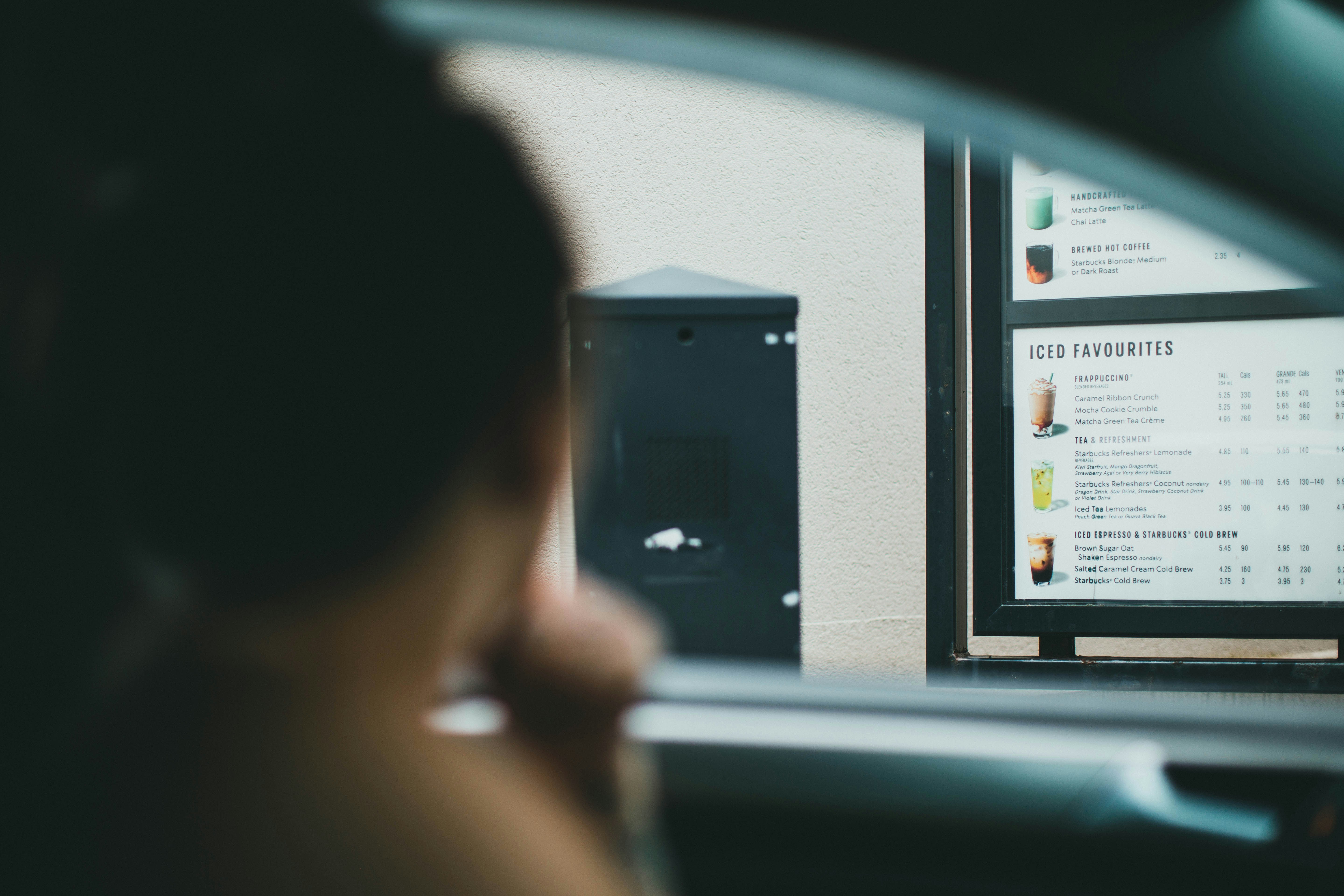
Cameras capture everything happening inside and outside a restaurant: team member activity, guest flow, speed of service at the drive-thru, and compliance with brand standards. Operators who treat camera footage as purely a security tool are leaving significant operational value on the table.
AI-powered video analytics surface patterns from that footage that managers would never catch by reviewing hours of raw video. Behavioral signals, such as how long a guest waits at the counter or where the drive-thru line begins to stack, give operations leaders coachable moments grounded in what actually happened, not what team members remember.
Savi's platform surfaces these insights across modules purpose-built for QSR operations: drive-thru analytics that track speed of service by site, daypart, and lane position; people analytics that measure in-store traffic and staffing alignment; and enterprise reporting that lets district managers compare unit performance across the portfolio in a single dashboard.
What is drive-thru analytics and how does it connect to camera systems?
Drive-thru analytics uses computer vision applied to existing camera footage to measure the time a vehicle spends at each stage of the drive-thru sequence: arrival, order, pay, pickup, and departure. No new sensors or loop systems are required at most sites.
For QSR operators, speed of service is a direct driver of throughput and guest satisfaction. Research Savi published in April 2025, based on analysis of more than 250,000 customer reviews, found that drive-thru sentiment influences 73% of a restaurant's overall review score and that 62% of consumers rank drive-thru experience as a top factor in choosing a restaurant.
Swig, a dirty soda chain, used Savi's drive-thru analytics to achieve its fastest drive-thru speeds on record, and avoided $4,000 to $6,000 per location in loop-timer installs, an estimated $1.1M for its franchisees. COO Chase Wardrop noted that Savi delivered ground-breaking insights without breaking ground at any of their sites.
How do operators use cameras to reduce internal theft and shrink across locations?
Internal loss is one of the most difficult problems to detect in a multi-unit environment because it rarely happens the same way twice and almost never shows up in transaction data alone. Video changes that equation.
When camera footage is paired with point-of-sale data, operators can surface anomalies that neither system would catch independently: a void pattern that tracks with a specific team member's shifts, a drawer discrepancy that lines up with a specific transaction, a back-of-house behavior that repeats across multiple visits.
Savi's Event Search capability lets loss prevention investigators pull the exact video clip tied to a flagged transaction in seconds rather than scrubbing through hours of footage. FiiZ Drinks discovered $3,250 in internal loss in its first 90 days using the same video-plus-Event Search approach.
What should multi-unit operators look for when evaluating a camera management platform?
The evaluation should center on three questions: Does it work with the cameras already installed? Does it scale without proportional IT overhead? And does it produce insight beyond raw footage?
A platform that requires new hardware at every site trades one capital problem for another. A platform that still requires site-by-site administration does not solve the visibility problem at scale. And a platform that stores video without surfacing operational intelligence is an expensive DVR, not an operations tool.
Operators should also evaluate how the platform serves multiple departments from a single dataset. The most durable investment is a cloud architecture where the same video infrastructure that serves loss prevention today can serve operations, compliance, training, and marketing tomorrow. As computer vision and AI capabilities advance, a cloud-architected video dataset lets a brand adopt new tools without revisiting site infrastructure. That foundation decision is worth weighing carefully, because switching costs in camera infrastructure are high and the gap between point solutions and a unified platform compounds with every location added to the portfolio.
How do franchisors maintain operational visibility across franchisee-owned locations?
Franchisors face a visibility challenge that corporate operators do not: the locations generating the brand experience are owned by someone else. A franchisor cannot mandate the same access controls at a franchisee site that it can at a corporate unit, and most franchisees are running their own patchwork of local camera hardware.
Cloud video management with standardized edge devices solves this at scale. When a franchisor deploys a consistent platform across the system, brand leadership gets the visibility needed to identify outlier locations, investigate compliance questions, and coach on service quality, while franchisees benefit from enterprise tooling they would not purchase independently.
A Burger King franchisee deployed Savi to eliminate the IT bottleneck that was preventing general managers and district managers from accessing video across the portfolio. The result was system-wide visibility that the franchisee's team described as the equivalent of a Google Search for their operations.
Ready to see how Savi unifies camera management across your portfolio? Request a demo