Measuring Front-Counter Wait Times With AI Cameras

Savi
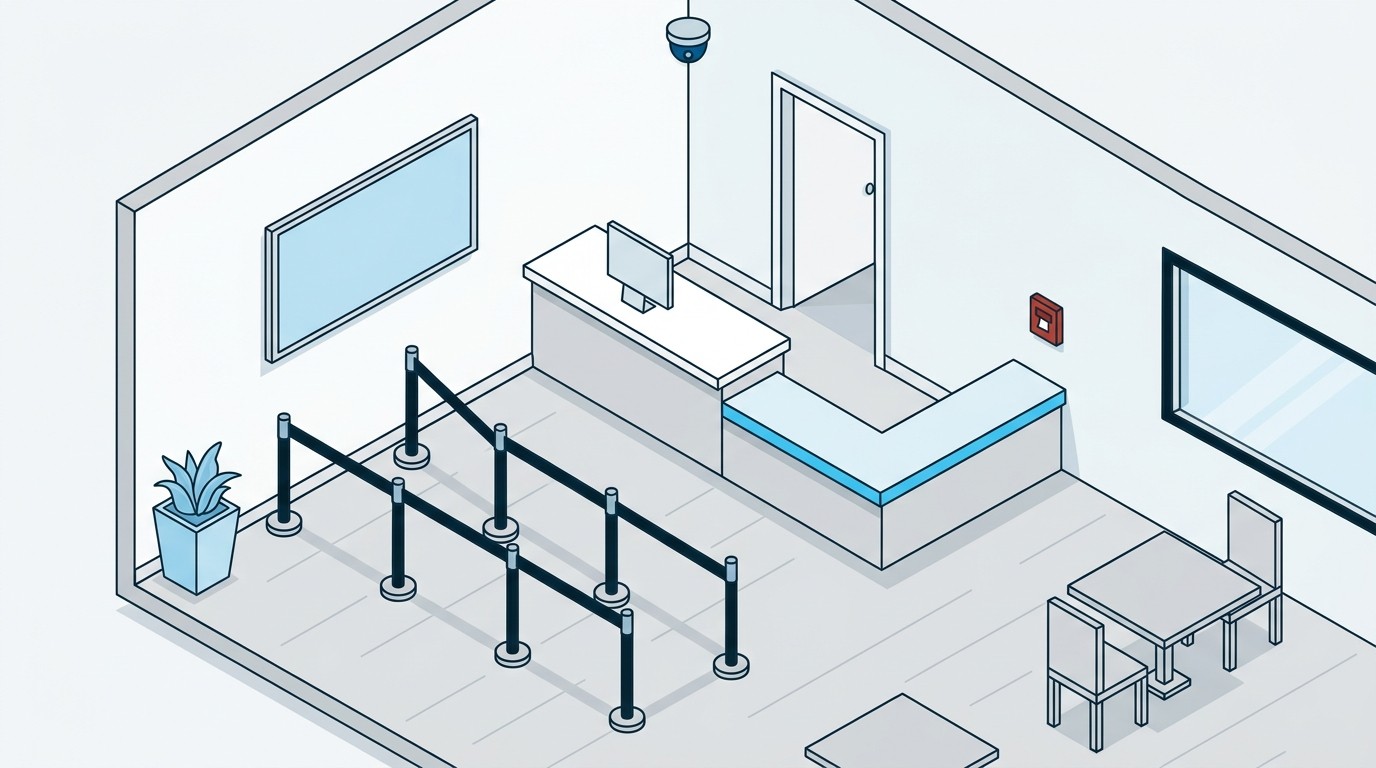
Restaurants measure front-counter wait times with AI cameras by using computer vision to detect when a guest enters a defined queue zone and when they leave it, timing the interval automatically instead of relying on a manager with a stopwatch. The camera doesn't need a POS trigger or a transaction to do this. It reads the visual scene itself: bodies entering a zone, bodies exiting a zone, and how long they lingered in between.
This zone-based approach works because the camera is already mounted where operators need the data most: above the queue, at the register, or facing the pickup counter. Once a site is on a cloud video platform, operators can pull wait-time trends by daypart, by shift, and across every location in one report, instead of spot-checking one store at a time.
Frequently Asked Questions
What exactly counts as a "wait time" at the front counter, and where does the clock start and stop?
Most operators define front-counter wait time as the interval from when a guest joins the queue line to when they receive their order or reach the register to pay, whichever the brand chooses as the endpoint. AI cameras handle this by defining virtual zones inside the camera's field of view, one for "queue entry" and one for "order complete" or "register." When a person's movement pattern crosses from one zone to the next, the system logs a timestamp automatically. Because the measurement is zone-based and visual, operators can also break it into segments: time to reach the register, time to receive food, and total time in the building. That segmentation matters operationally, because a slow total time could be a kitchen problem, a staffing problem, or a layout problem, and segment-level data is what tells a manager which one it actually is. Brands typically set this up once per counter layout and then apply it consistently across every location, so a "wait time" means the same thing whether it's measured in Store 4 or Store 400.
How is AI-based wait time tracking different from a manager with a stopwatch or a mystery shopper visit?
Manual timing methods only capture a sample: one shift, one day, one visit. AI camera-based tracking captures every guest, every daypart, every day, which turns wait time from an occasional spot-check into a continuous operational metric. That difference matters because speed of service tends to degrade during predictable windows, like lunch rush or a Friday dinner surge, and those are exactly the windows a manager doing a single walk-through is most likely to miss. Continuous measurement also removes the observer effect. Team members behave differently when they know a district manager is standing in the lobby with a clipboard, but they can't behave differently for a ceiling-mounted camera that's always running. The result is a wait-time baseline that reflects what guests actually experience on an average Tuesday, not what happens when someone official is watching. For multi-unit operators, this also means comparing 50 or 500 locations on the same metric, calculated the same way, instead of comparing notes from 50 different mystery shopper reports.
Can front-counter cameras track wait times without linking to point-of-sale transactions?
Yes. Measuring how long a guest stands in a queue zone is a computer vision task: it's based on detecting a person, tracking movement between defined zones, and timing the interval, none of which requires a transaction to trigger it. That's a separate capability from tools like Event Search, which retrieve a specific video clip tied to a specific transaction, such as pulling footage of a particular refund or a flagged order. Wait-time measurement and transaction-linked video retrieval solve different problems and use different mechanics, even though they can run on the same camera and the same cloud platform. Operators evaluating a vendor should ask directly which mechanism is doing the work, since some "AI wait time" claims are actually built on transaction timestamps rather than visual detection, and that distinction affects accuracy when guests queue for something that isn't a discrete POS event, like waiting for a mobile order to be called.
What other operational issues can the same front-counter cameras reveal beyond wait times?
The same visual data that measures wait time can also surface guest engagement patterns, like whether team members greet guests within a set number of seconds of queue entry, and brand compliance issues, like whether a required uniform or handwashing step is being followed consistently at the counter. Because the camera is already watching the zone, these are additional questions asked of the same footage, not new hardware or new sites to wire up. On the loss prevention side, front-counter cameras also help operators catch and address issues like unrecorded transactions or unauthorized discounts when paired with video review, the same way FiiZ Drinks used video and Event Search to uncover $3,250 in internal loss in its first 90 days. Wait time, service consistency, and shrink all live in the same video stream. The value of AI cameras isn't just one metric, it's that operators stop treating each of these as a separate investigation and start treating them as one continuous dataset.
Do AI cameras that measure wait times use facial recognition or identify customers by name?
No. Zone-based wait time measurement only needs to detect that a person is present and track their movement between defined areas. It doesn't need to know who that person is, and identifying individual guests by name isn't part of how this metric works. The system is answering an operational question ("how long did people wait in this zone today") rather than a surveillance question ("who was this specific guest"). This distinction matters for operators fielding questions from franchisees or guests about privacy, and it's worth confirming directly with any vendor how their system defines and processes what it detects, since implementations vary. Most restaurant use cases for wait-time analytics, staffing coaching, and compliance checks are built entirely on aggregate, zone-level movement data rather than individual identification.
How quickly can a multi-unit chain roll out AI-based wait time measurement across all its locations?
Rollout speed depends heavily on whether the brand can use its existing security cameras or has to replace them. Platforms built to work with a site's current camera hardware avoid the cost and downtime of a full swap, syncing footage and analytics to the cloud through a small edge device instead. For a chain evaluating wait-time analytics specifically, the practical question to ask a vendor is whether the existing camera fleet is usable as-is, since that single factor tends to determine whether a rollout takes months or a single fiscal quarter.
How does Savi help restaurants measure and improve front-counter wait times?
Savi's People Analytics and In-Store Flow module uses the cameras a brand already has to track guest movement through defined zones, including front-counter queues, and reports wait times by site, daypart, and shift inside one cloud dashboard. Operators get the segment-level detail needed to tell whether a slow counter is a staffing gap, a layout bottleneck, or a kitchen delay, and they get it across every location instead of one store at a time. Savi's drive-thru analytics work with brands like Swig shows the same pattern applied to a different queue: Swig improved drive-thru speeds by 7 to 10% after gaining visibility they didn't have before. Front-counter measurement runs on the same underlying platform, so operators aren't standing up a separate tool just to watch a different line.
The Same Video Dataset, Built for What's Next
Measuring front-counter wait times is one use of a much larger dataset. The same cloud video that times a queue today can also power loss prevention review, brand compliance checks, and training insights tomorrow, without adding new cameras or re-wiring a single site. That's the practical difference between buying a point solution and choosing a foundation: a cloud-architected video platform lets a brand adopt new computer vision tools as they mature, because the infrastructure and the data are already there. Operations, IT, loss prevention, and training teams can all draw from the same footage instead of running separate systems that never talk to each other. For a multi-unit operator planning years of growth, that's the decision that matters more than any single metric.
Curious what this looks like for your locations? See how Savi works, request a demo. Multi-unit operators also managing shrink alongside speed of service can explore Savi's approach to loss prevention.